Arizona’s Two Growing Seasons: Recovering From July Garden Loss
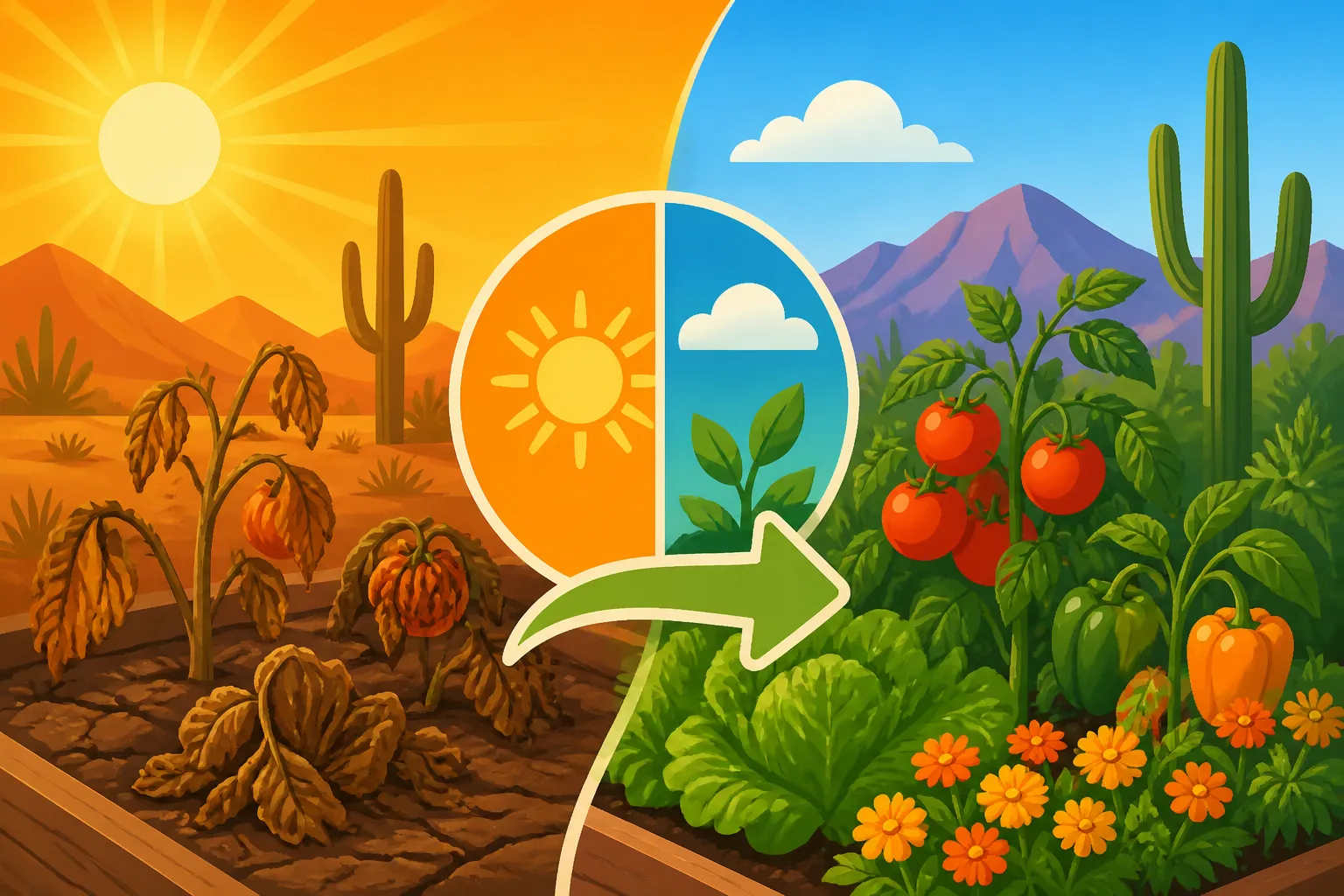
A July garden in Arizona can look finished: tomatoes stop setting fruit, leaves scorch, and seedlings collapse despite regular watering. The answer is not always to replant immediately. Recovery depends on what failed, where you garden, and how soon cooler weather arrives. Use the heat to diagnose and reset, then choose whether to protect surviving plants, sow a short-season crop, or prepare for the next growing season.
Why July Can End One Season and Begin the Next
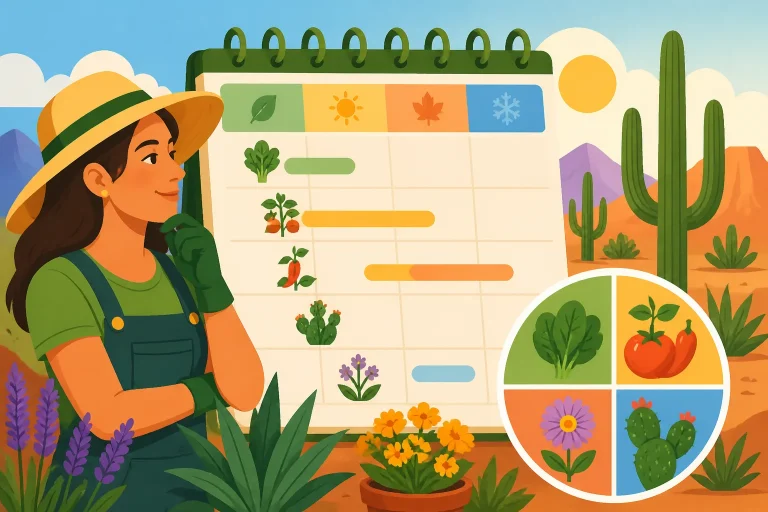
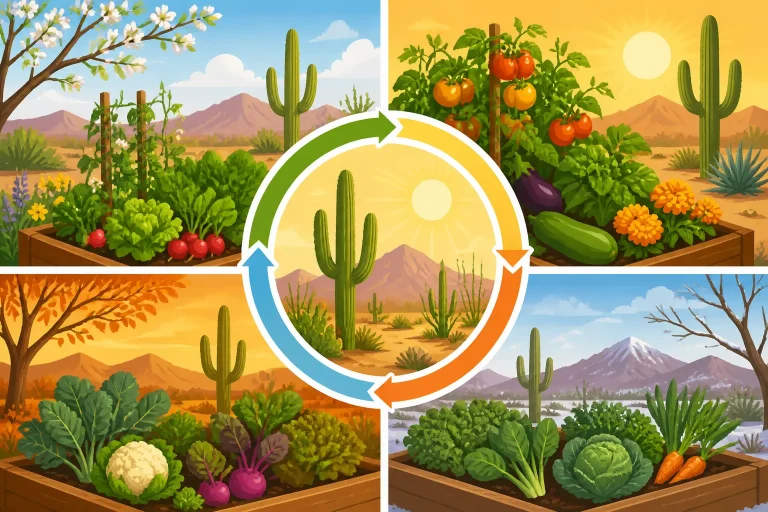
Arizona does not have one statewide planting calendar. Elevation, local frost risk, reflected heat, soil, and the timing of summer weather all affect what can grow and when. In many low-desert gardens, however, the year is organized around two main vegetable-growing periods: a cooler season and a warm season. The hottest part of summer can sit between them, when many familiar crops struggle to grow or produce.
A July setback is therefore not automatically a gardening failure. It may be the end of a crop’s useful window. Heat can cause flowers to drop, prevent fruit from setting, speed up bolting in leafy crops, and dry out shallow-rooted seedlings. Some plants may recover when conditions ease; others have already reached the end of their productive life.
The seasons do not switch on a single date. A neighborhood with afternoon shade, a cooler elevation, or a sheltered garden bed may offer a different window from a sun-baked yard nearby. And the time available for a fall crop depends on how long that crop needs to mature before cold weather slows or stops growth. That is why a calendar based only on the month can mislead. Low-Desert Planting Calendar: Two Main Growing Seasons explains the broad seasonal pattern, while Arizona Planting Calendar by Elevation and Zone helps account for regional differences.
Before deciding what to plant, think of July as a transition period. The practical questions are:
- Is the crop still capable of producing a worthwhile harvest?
- Is the plant alive and likely to recover, or has its growing point died?
- Can a replacement crop mature before local cold slows it down?
- Can the bed be kept moist without staying waterlogged?
- Will the site still receive enough light for the crop you choose?
A garden can be productive in July and still lose plants to heat. It can also look rough while retaining a few healthy plants that are worth keeping. The goal is not to save every plant. It is to put water, space, and effort where they have a reasonable chance of paying off.
Diagnose the Loss Before Replanting
A dead seedling and a heat-stressed plant can look similar at first. Wilting, brown edges, yellow leaves, and stalled growth are signs of trouble, but they do not all point to the same cause. Before clearing a bed, check the plant, its roots, and the soil.
Check whether the plant is still alive
Look for living growth near the crown, base, or growing tips. A plant with firm green tissue and flexible stems may still recover, even if older leaves are damaged. A plant with a soft, darkened stem base, a collapsed crown, or brittle dead growth through the growing point is less likely to rebound.
Do not assume every brown leaf means the whole plant is dead. Leaves exposed to direct afternoon sun or reflected heat can scorch while shaded leaves and lower stems remain viable. Remove only clearly dead or badly damaged growth at first, then give a living plant time to show whether it can make new growth. Avoid stripping off healthy leaves; they still help the plant capture light.
Feel the soil at root depth
Dry soil at the surface does not necessarily mean the entire root zone is dry, and a damp surface does not prove the roots have enough water. Check below the surface near the plant’s root area. If the soil is dry where the roots are growing, irrigation may not be reaching deeply enough. If it is persistently saturated, poor drainage or excessive watering may be contributing to root damage.
Different soils hold water differently. Coarse soil may drain quickly, while heavier soil can remain wet long after the surface looks dry. Drip emitters can also clog, shift, or deliver unevenly. If several plants in one section wilt while others nearby look healthy, inspect the irrigation rather than assuming the problem is only the weather. Probing Soil Moisture Depth Under Vegetable Drip Lines offers a useful way to check whether water is reaching the root zone.
Separate heat damage from pests and disease
Heat stress often affects plants across an exposed area or shows up most strongly on surfaces facing afternoon sun. Pest damage tends to have more specific clues, such as chewed leaf edges, clusters of insects, webbing, or distorted new growth. Disease may cause expanding spots, lesions, or rot, particularly where foliage stays wet or air movement is poor.
These causes can overlap. A heat-stressed plant may become more vulnerable to other problems, and monsoon humidity or rain can change disease pressure. Inspect both sides of leaves and the stems before deciding to discard a plant. If the damage pattern is unclear, compare affected plants with healthy ones nearby and consider the timing: did symptoms begin after intense sun, a missed irrigation, a storm, or the appearance of insects? Diagnosing Pest and Weather Damage on Arizona Vegetables can help narrow down what you are seeing.
Use a simple triage table
| What you find | What it may mean | A sensible next step |
|---|---|---|
| Wilted leaves but firm stems and moist soil | Heat stress, limited root function, or temporary midday droop | Check the root zone and irrigation; observe the plant during cooler hours |
| Dry soil below the surface | Water is not reaching the active roots, or the interval between watering is too long for conditions | Correct delivery and check soil moisture again rather than adding water blindly |
| Wet, sour-smelling soil or a soft stem base | Poor drainage or root and crown damage may be involved | Pause and assess drainage; remove plants with extensive rot |
| Brown leaf edges on the sun-facing side | Scorch or reflected heat is possible | Reduce exposure where practical and retain healthy foliage |
| Flowers dropping or little fruit forming | Heat may be interfering with flowering and fruit set | Decide whether to wait for better conditions or replace the crop |
| Chewed leaves, webbing, or visible insects | Pest activity may be contributing | Identify the pest before choosing a response |
| No healthy growth and a dead crown | The plant is unlikely to recover | Remove it and prepare the bed for the next crop |
A diagnosis does not need to be perfect before you act. It does need to be good enough to avoid repeating the same problem. If a bed failed because water never reached the roots, planting new seedlings into it without fixing irrigation simply starts the next loss.
Decide What to Keep, Remove, or Replace
Once you have checked the plants and soil, sort the garden into three groups: keep, remove, and wait.
Keep plants with a realistic chance to recover
A plant is worth keeping if it still has healthy growing tissue, a stable root system, and a plausible path to producing or sustaining useful growth. That does not mean it must look attractive. A few scorched leaves may be a manageable cost if the stem and crown are sound.
Keep plants that are still producing useful harvests, provided they are not badly diseased and can be watered appropriately. Remove dead leaves selectively, avoid damaging the crown, and do not push the plant with extra fertilizer in an effort to force rapid recovery. Fertilizer cannot undo heat injury or repair dead roots; a stressed plant may be less able to use it effectively. For any fertilizer product, follow its label.
A plant that has stopped producing may still be useful as shade for nearby soil, but retaining it can also compete for water and space. Consider whether its benefits outweigh the work of maintaining it. If it is a large, unproductive plant blocking light or taking up an important bed, removal may make more sense.
Remove plants that are spent, diseased, or beyond recovery
Clear plants that have died back through the crown, have extensive rot, or are unlikely to produce again before the season changes. Removing them opens space for bed preparation and helps you avoid watering a crop with no realistic return.
If you suspect a contagious disease or a serious pest issue, avoid leaving affected plant material in place. Do not compost it unless you know your composting process can handle it. For ordinary dead, healthy crop material, disposal options depend on local guidance and household composting conditions.
Clear weeds as you go. They compete for water, may shelter pests, and make it harder to see what is happening in the bed. Pull or cut them before they set seed where practical. Mulch can suppress new weeds, but it does not replace checking the soil and irrigation underneath. Garden Mulching Strategies for Conserving Soil Moisture in Arizona covers how mulch fits into a water-conscious garden.
Wait when the bed needs a reset
Not every empty space needs an immediate crop. Waiting can be the best choice if the bed is too hot for reliable germination, the soil stays saturated after storms, the irrigation layout needs repair, or you do not have enough time for a crop to mature.
Use the pause to remove dead roots, clear weeds, improve access, and check the bed’s moisture pattern. If the soil has crusted, compacted, or become difficult to wet, address that before sowing. Avoid working very wet soil, which can damage its structure, and avoid trying to correct a poorly draining bed by adding a small amount of coarse material without understanding the underlying problem. Getting Desert Soil Ready for a First Vegetable Garden gives broader context on preparing a bed for productive planting.
The best decision is often to keep a few healthy plants, remove the ones that are done, and leave one section unplanted while you correct the conditions that caused trouble. A partial reset is more manageable than trying to replace the entire garden at once.
Rebuild the Bed and Water for New Growth
A recovering plant and a new seedling have different needs. Established roots may reach deeper soil, while newly sown seeds and fresh transplants rely on a much smaller area that can dry quickly. Before planting, make sure the bed can support the crop you want to grow.
Repair irrigation problems first
Run the irrigation system and watch what happens. Confirm that emitters are working, tubing is connected, and water is reaching the intended plants. Look for runoff, leaks, or water pooling in one place while other areas stay dry. If you use hand watering, make sure it wets the root zone rather than just the soil surface.
Do not assume that one watering schedule fits every bed. Soil texture, plant size, exposure, and container or bed depth all affect how quickly the root zone dries. A schedule that worked in a cooler part of the year may not suit young plants during hot weather. At the same time, adding more water without checking the soil can create a different problem, especially in poorly drained beds. Watering Vegetables in Arizona: Irrigation Timing and Methods explains the principles behind matching water delivery to the garden.
Protect the soil surface without smothering plants
A suitable layer of organic mulch can reduce direct sun on the soil and slow moisture loss. Keep mulch from resting tightly against stems and crowns. Newly emerged seedlings need room to grow; a thick layer directly over the seed row can block light or make it difficult for small seedlings to emerge. For freshly sown beds, use mulch carefully and adjust it as seedlings develop.
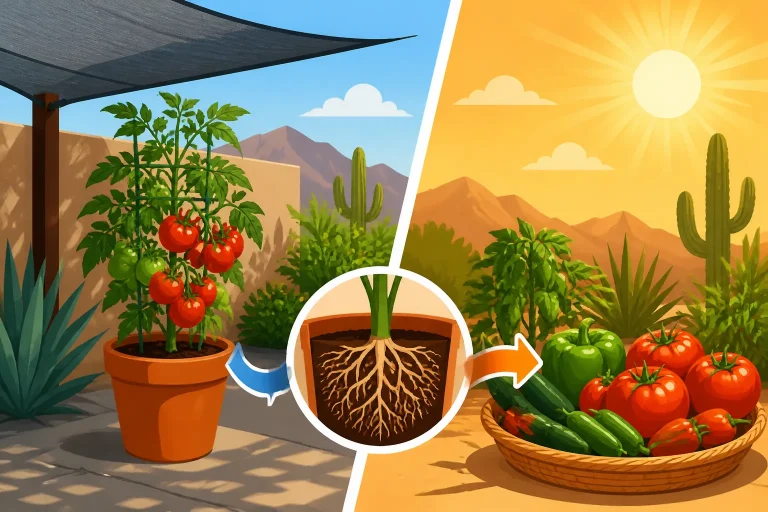
Shade can help sensitive plants through a period of intense sun, but it is not a cure for bad irrigation, poor drainage, or a crop planted outside its useful window. Temporary shade is most helpful when it reduces harsh afternoon exposure while allowing adequate light and airflow. A permanent change in exposure may be needed where reflected heat from paving or walls is part of the problem. How Afternoon Shade and Potted Roots Shift Harvest Days discusses why site conditions can change how quickly plants mature.
Avoid overcorrecting with fertilizer
After losing crops, it is tempting to add fertilizer before replanting. That is not always useful. A bed may have adequate nutrients but lack water, have compacted soil, or be too hot for the intended crop. Excess nutrients can also harm plants or increase unwanted leafy growth at the expense of other goals.
Base fertilizer decisions on the crop, the soil, and the product directions. If you are uncertain about a soil problem, a soil test can provide information to guide amendments. Do not use fertilizer as a general stress treatment. When applying any fertilizer, use the product label as the instruction for safe and lawful use.
Sow and transplant with the weather in mind
Seeds need suitable soil conditions to germinate. During hot weather, the surface can dry quickly, and a brief dry spell may interrupt germination. Sow at the depth suited to the crop, keep the seed zone consistently moist while seeds are establishing, and avoid allowing it to become waterlogged. For transplants, water the root ball and surrounding soil, then monitor closely as roots begin to expand.
If heat remains intense, a small test planting can be wiser than filling every bed. Start with a short row or a few transplants, observe how they handle the site, and scale up when conditions improve. If the first attempt struggles, you lose less seed and time and gain useful information about the bed.
Plan the Next Crop Around Your Region and the Remaining Season
The right crop after a July loss depends on location and timing. A low-desert garden may be preparing for a fall and winter growing period, while a higher-elevation garden may have a much shorter window before cold weather. Treat crop choice as a calculation: the plant needs enough favorable time to establish, grow, and reach a usable stage before conditions become unsuitable.
Start with your growing region
Arizona’s elevation changes the length and character of the growing season. Low-desert gardeners may have a long warm period and a distinct seasonal shift toward cooler-weather crops. Mid-elevation sites face different timing and may have a narrower window. High-country gardens must consider frost risk and the shorter time available for warm-season crops.
Do not copy a planting date from another Arizona town without checking how its elevation and local conditions compare with yours. Use a calendar suited to your area and account for the specific site: a sheltered yard and a cold-air pocket can behave differently even within the same community. When to Start Your Garden by Arizona Elevation and Finding Arizona Planting Guides by Elevation and County can help you choose a more relevant starting point.
Match the crop to the time left
Read the seed packet or plant tag for days to maturity, and remember that this is an estimate under favorable growing conditions, not a guarantee. Heat stress, transplant shock, low light, cold nights, and inconsistent moisture can all slow a crop. For a late planting, choose crops with a realistic path to harvest rather than relying on a long-season plant to catch up.
Think about what “mature” means for your goal. Some crops can be harvested young; others are not useful until they form a full head, root, fruit, or pod. A leafy crop may offer an early cut even if it never reaches the size shown in a catalog. A fruiting crop may need more time than its first harvest estimate suggests if you are starting from seed rather than a transplant.
For a detailed comparison of seed starting and transplanting, see Direct Sowing vs. Starting Indoors: Which Arizona Crops Need Starts?. In a short window, an established transplant can save early growth time, but only if it is healthy and not already stressed. Direct sowing avoids transplant shock for crops that handle it poorly, but the seedbed must stay suitable during germination.
Use the transition rather than fighting it
Where the heat is still severe, you may need to wait for more suitable conditions before establishing cool-season crops. Waiting does not mean doing nothing. Clear finished crops, repair irrigation, prepare the seedbed, and plan what will go where. If you want to start seedlings in a protected area, make sure they will not overheat or dry out while waiting to be transplanted.
For the low desert, the broad shift from warm-season crops toward cool-season planting is useful, but the exact window varies with weather and location. Cool-Season Planting: What Belongs in an Arizona Fall Garden offers crop-planning context, and When Fall Vegetables Mature in the Arizona Low Desert can help you think about the time between planting and harvest. If you are already behind, Starting Mid-Season: Which Crops Can Still Finish in Time? is useful for narrowing choices.
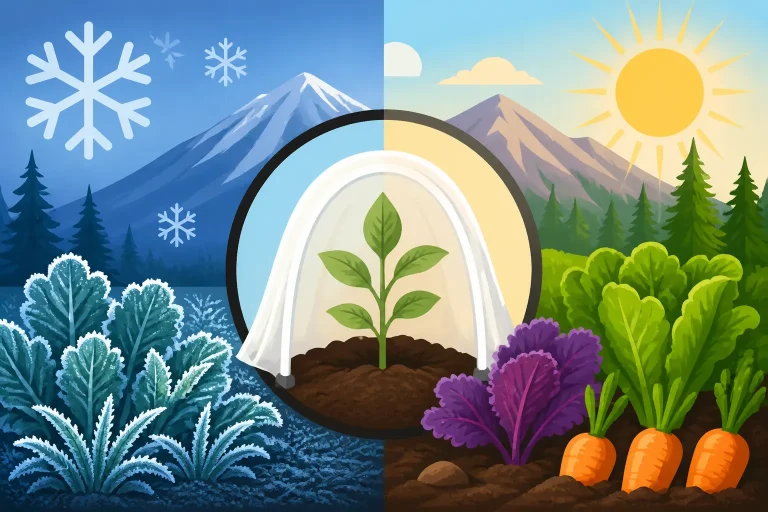
At higher elevations, do not assume that a warm-season crop planted after a July loss has the same time available as one planted earlier. Check local frost probabilities and plan for the crop’s full development time. Managing Short Seasons and Frost Risk in the Arizona High Country explains why a short growing window can make crop selection more important than an ambitious planting list.
Keep a succession plan small and flexible
Instead of sowing all of a crop at once, divide planting into smaller rounds when the season permits. If a row fails, you can retry a portion without losing the whole planting. Succession planting is especially useful when temperatures are changing and the best window is uncertain. It also helps stagger harvests rather than producing more than you can use at once. Succession Sowing in Arizona to Prevent Summer Harvest Gluts covers the broader strategy.
A simple plan can include one bed for crops you know suit the season, one small trial area, and one section left open for a later planting. This keeps the garden productive without forcing every square foot into immediate use. Track the planting date, variety, site exposure, and what happened. These notes are more valuable than a generic date when you are deciding what to try next year.
Prevent Another July Loss
A difficult July can reveal which parts of the garden are vulnerable. Use what happened to adjust the next season’s planting, layout, and care rather than treating every loss as bad luck.
Plant for the conditions you actually have
A crop that thrives in a sheltered bed may fail beside a west-facing wall or a paved surface that reflects heat. Observe how sunlight moves through the garden, where hot air collects, and which beds dry first. If a crop repeatedly scorches in one spot, changing the planting location may work better than adding more water or shade every year. Checking Garden Exposure and Microclimates Before You Plant in Arizona helps make these site differences visible before planting.
Choose crop types and varieties suited to the season and region. For summer conditions, heat tolerance can matter, but no variety is immune to extreme heat or inadequate water. Selecting Heat-Tolerant Vegetable Varieties for Arizona can support that choice. For fall, select crops with enough time to mature in your local window rather than choosing only by preference.
Establish plants before they face the harshest conditions
Planting time affects how much root growth a crop can build before stressful weather. A young plant with a small root system is more vulnerable to rapid drying than an established plant. Where the local calendar allows, aim to establish crops during a more favorable period rather than expecting them to grow well through the most punishing part of summer.
This does not mean every crop should be started indoors or planted early. Starting too soon can expose seedlings to conditions they cannot tolerate, and transplanting a heat-stressed plant can set it back further. Use the crop’s needs and local planting guidance to decide whether to sow directly, start indoors, or wait.
Make water delivery dependable
A garden can receive frequent irrigation and still have dry roots if water is not reaching far enough or is distributed unevenly. Check emitters regularly, especially after moving tubing, digging, or changing plant layout. Confirm that the soil is moist where roots are active, then adjust the system as plants grow. Setting Drip System Run Times to Soak Root Zones Deeply and Monthly Drip Checks to Stop Clogged Emitters in Desert Yards offer practical follow-up on irrigation setup and maintenance.
Avoid making irrigation decisions based only on a fixed calendar. Weather, soil, plant size, and exposure change water needs. Watch the plants, check the soil, and look for runoff or persistent saturation. If water runs off before soaking in, the solution may involve changing how water is applied rather than simply increasing the total amount.
Keep a simple seasonal record
Record what was planted, when it was planted, whether it was seed or transplant, where it grew, and when problems appeared. Note whether the soil was dry below the surface, whether plants were shaded, and whether pests or storm damage were present. A short note such as “seedlings failed in exposed bed after surface dried quickly” can be more useful next season than “garden did badly.”
Include both successes and failures. If a crop survived in one area but not another, that comparison points toward a site or irrigation difference. If a plant stayed healthy but stopped producing, the problem may have been the seasonal window rather than the bed. Over time, your notes help replace guesswork with a planting plan that fits your own yard.
Frequently Asked Questions
Should I replant immediately after losing vegetables in July?
Not necessarily. First check whether the soil, irrigation, and weather can support a new planting. If the bed is still too hot, water delivery is uneven, or the next crop lacks time to mature, waiting and preparing the bed may be the better choice.
Can a tomato plant recover after July heat damage?
Sometimes. Look for healthy stems and living growth points, and check that roots are not rotting or drying out. If the plant is alive, remove only clearly dead growth and assess whether it is likely to produce again in your local season. A severely damaged plant with no healthy growth may be better replaced.
Why do my plants wilt when the soil is moist?
Heat can increase water loss and stress roots even when some soil moisture remains. The soil may also be wet at the surface but dry deeper down, or roots may be impaired by poor drainage. Check moisture near the roots and inspect the plant base before adding more water.
What should I plant after July in Arizona?
There is no single answer for the whole state. It depends on elevation, local frost risk, current heat, and how much time the crop needs to mature. Use a regional planting calendar and compare the crop’s expected maturity time with the favorable growing period remaining.
Is it better to leave an empty bed or plant something quickly?
An empty bed is better when the site needs repair or conditions are unsuitable for the next crop. Plant promptly when the bed is ready and the crop has a realistic chance to establish and mature. A small trial planting is a useful middle ground when you are unsure.
Disclaimer
This article is for general informational purposes only and does not constitute professional advice. Laws, prices and regulations vary by location and change over time. Consult a qualified professional for guidance on your specific situation. Arizona Gardening Guide is not a government agency and is not affiliated with any university extension, state department of agriculture or other government agency.