Low Desert Vegetable Gardening Across All Four Seasons
Arizona’s low desert can support vegetables in every season, but not by using one continuous planting calendar. Heat, cool nights, frost risk, and changing day length create distinct growing windows. The key is to match each crop to the conditions it needs, then adjust for your garden’s elevation, exposure, and soil rather than relying on a single set of dates.
Why the Low Desert Has More Than One Planting Season
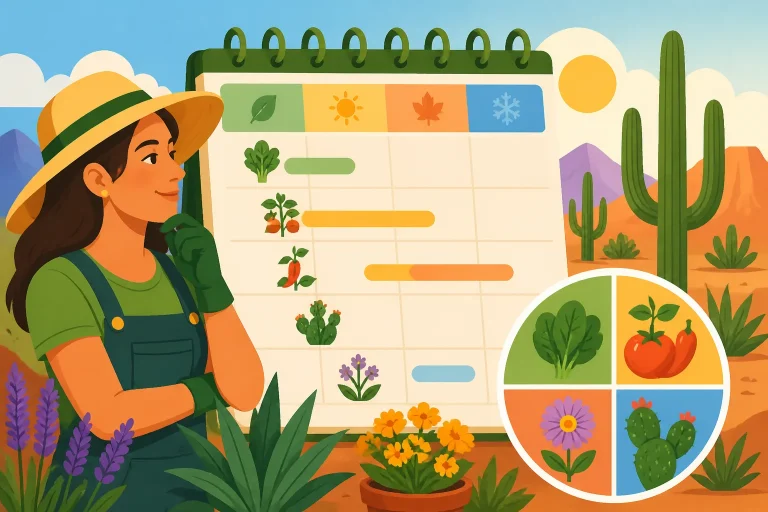
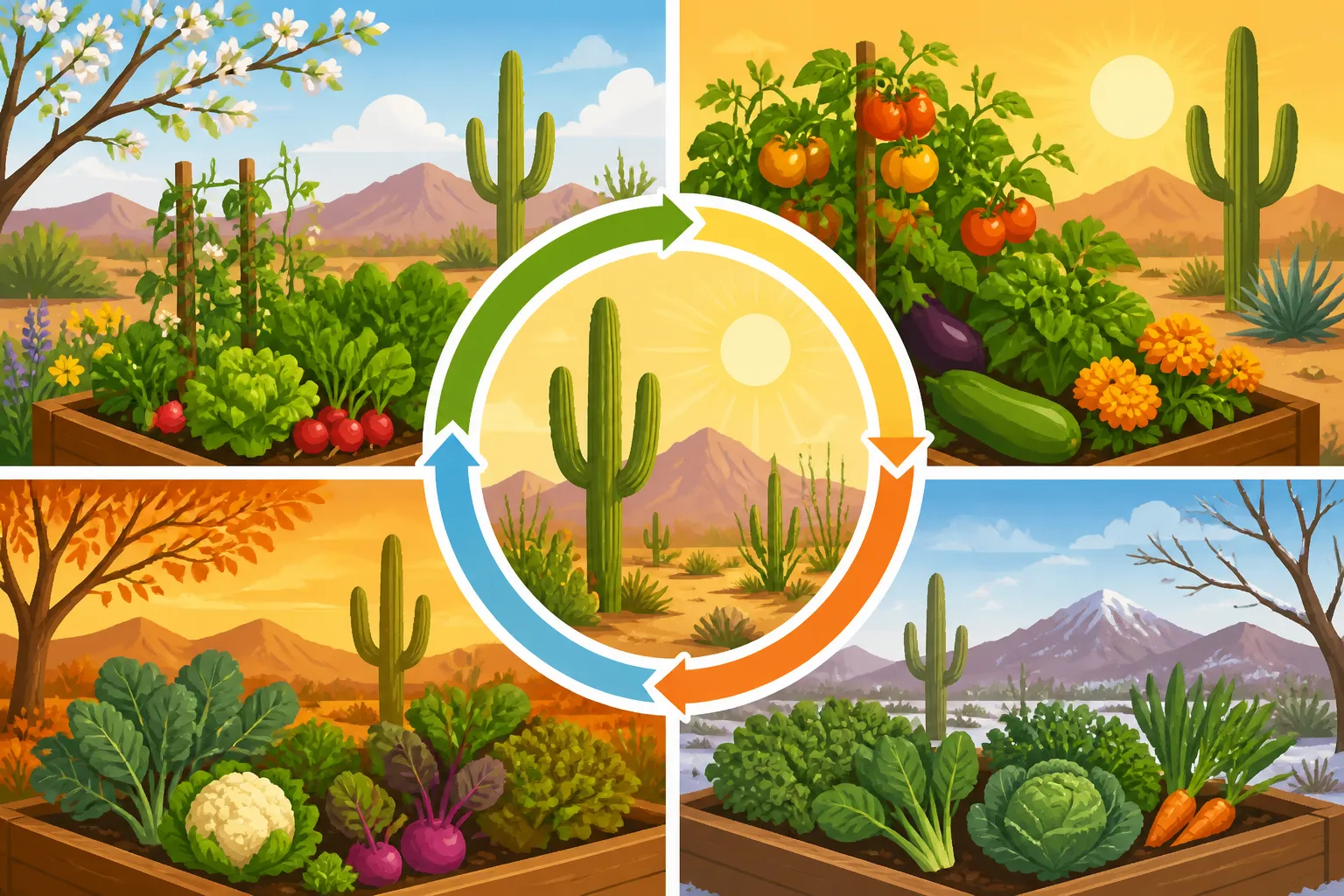
In the low desert, a vegetable garden often moves between two main growing seasons: a cooler stretch suited to leafy greens and roots, and a warmer stretch for crops that need heat. Summer sits between them as a challenging season of its own. Some vegetables keep growing through it, while others pause, struggle, or need to be replanted when conditions improve. The pattern is more useful than thinking of the year as one long spring followed by one long summer. For a closer look at that rhythm, see Low-Desert Planting Calendar: Two Main Growing Seasons.
A calendar still helps, but it is a starting point, not a guarantee. Your planting window depends on more than the season name. Soil temperature affects whether seeds germinate and roots establish. Night temperatures can slow warm-season crops, while hot afternoons can make cool-season seedlings wilt or bolt. Frost risk varies from year to year, and a garden beside a warm wall may behave differently from one in an exposed, low-lying spot.
Elevation matters, too. Low-desert conditions do not describe every Arizona yard. If your garden is at a higher elevation, its season lengths and frost patterns may differ substantially. Use a calendar made for your region before applying low-desert timing; Choosing the Right Arizona Planting Calendar for Your Area explains why local conditions matter.
A useful way to plan is to think in terms of crop needs:
| Season or transition | General garden conditions | Crops to consider | Main planning challenge |
|---|---|---|---|
| Cool season | Mild days and cool nights | Lettuce, spinach, peas, broccoli, carrots, beets, radishes | Establishing crops before the coldest or warmest stretch |
| Warming spring | Soil and air are warming | Tomatoes, peppers, beans, squash, melons, corn | Avoiding a start that is too cold or too late |
| Hot summer | Long, intense heat; warm nights | Okra, heat-tolerant beans, sweet potatoes, some squash | Protecting roots and moisture; accepting that some crops stop setting fruit |
| Cooling fall | Heat eases and nights begin to cool | Leafy greens, brassicas, roots, peas | Starting early enough for crops to mature before winter cold |
The table names broad crop groups, not guaranteed planting dates. A crop can fit a season yet still struggle if it is sown into cold, wet soil or exposed to extreme heat while young. Check the seed packet for sowing guidance and days to maturity, then compare those requirements with your likely growing window. For guidance on choosing a calendar by location, see Arizona’s Two Growing Seasons: Recovering From July Garden Loss.
It also helps to distinguish between the planting window and the harvest window. A vegetable may be planted during one season and harvested in another. A cool-season crop sown as temperatures begin to ease can take time to develop, and short winter days may slow growth. A warm-season crop started late may run into heat before it produces well. Planning backward from the likely harvest period can help you decide whether there is enough time for a crop to finish.
Keep a simple record of what you plant, when it emerges, how it responds, and when you harvest. Note problems such as poor germination, flower drop, or bolting. After a few cycles, those observations can make a general calendar more useful for your own site.
Spring: Start Warm-Season Crops as Conditions Improve
Spring is a transition, not a single signal to plant everything. The first warm afternoons do not necessarily mean the soil is ready for heat-loving seeds or transplants. A cold snap can still slow young plants, and damp or cool soil can encourage seed rot rather than steady germination. Before sowing, check soil warmth and condition at the depth where the seed will sit. Soil should be workable rather than sticky, and the forecast should not show a sharp return to cold conditions for tender starts.
Warm-season crops include tomatoes, peppers, eggplant, beans, squash, cucumbers, melons, and corn. These crops differ in how much warmth they need and how they respond to an early start. Beans, corn, and cucurbits are often sown directly in the bed once soil conditions suit them. Tomatoes and peppers are commonly planted as transplants, which gives them a head start, but a transplant still needs settled conditions to establish. For the trade-offs between sowing and transplanting, see Direct Sowing vs. Starting Indoors: Which Arizona Crops Need Starts?.
Match the method to the crop
Direct sowing avoids transplant shock and works well for many crops with large seeds or sensitive roots. It also puts the seed directly into the soil where the plant will grow, so the bed must be ready and consistently moist during germination. Starting indoors or buying a transplant can save time for crops with a longer development period, but indoor seedlings need adequate light and gradual adjustment to outdoor conditions.
Harden off indoor-grown starts by gradually exposing them to outdoor light and air before planting. A seedling raised in sheltered conditions may scorch or wilt if moved straight into intense sun and wind. After transplanting, keep the root zone evenly moist while the plant settles in, without leaving the soil waterlogged.
Tomatoes are a common spring crop, but planting too early can stall their growth, while planting too late can bring them into the hottest conditions just as flowering and fruit set become vulnerable. The right time depends on local conditions and the type of tomato. See When to Put Tomato Transplants Outdoors in Arizona for more on choosing a suitable window.
Prepare the bed before planting
A successful start depends on the bed as much as the seed. Clear out spent crops and weeds, check that irrigation reaches the intended root zone, and loosen compacted soil without working it when it is wet. If you are building a new vegetable bed, consider drainage, access, and how the area will be watered before filling it. Desert soil can vary widely, so avoid assuming that every bed needs the same amendment. Getting Desert Soil Ready for a First Vegetable Garden covers the basics of preparing a growing area.
Group crops with similar water needs together where practical. A bed of newly sown seeds needs more frequent attention at the surface than an established crop with a deeper root system. If both are on the same irrigation arrangement, one may receive too much or too little water. Using separate zones or adjusting the layout can make care easier.
Mulch can reduce evaporation and protect the soil surface, but keep it from smothering emerging seedlings. Apply it around established plants rather than burying small seedlings. As temperatures rise, shade may help reduce stress on young plants, though it should not be used to compensate for poor watering or an unsuitable planting time.
Set realistic expectations for spring harvests
Spring is a productive period for warm-season crops, but not every plant will keep producing once intense heat arrives. A tomato plant may flower and set fruit in suitable conditions, then slow or stop setting fruit during extreme heat. Peppers, beans, squash, and other crops can also respond differently as temperatures climb. Plan for the possibility of a shorter productive period rather than expecting every plant to bear continuously.
Succession planting can spread out harvests. Instead of sowing a full bed of one crop at once, plant a smaller amount, then make another sowing if conditions and remaining season length allow. This is especially helpful for crops that mature quickly or produce over a relatively short period. Avoid sowing a later round automatically: check how many days the crop needs and whether the next stretch of weather will support it.
Summer: Keep Productive Crops Going and Protect the Rest
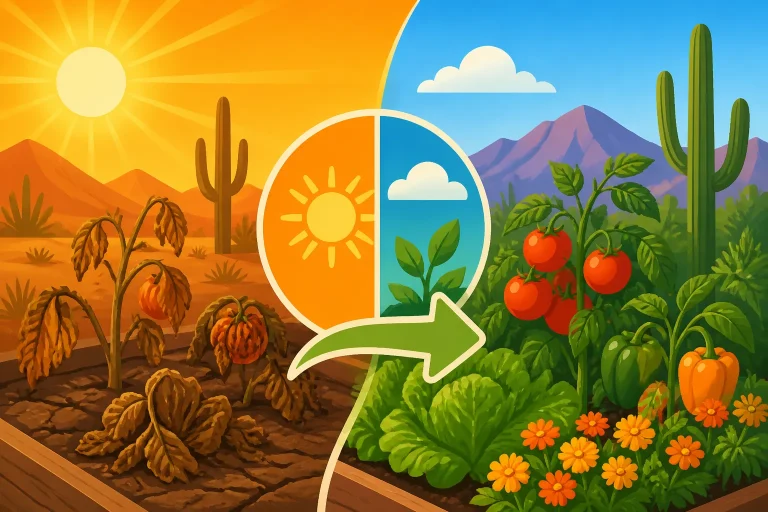
Low-desert summer is the hardest season for many vegetables. Intense sun and heat can cause wilting, leaf scorch, blossom drop, and poor fruit set. Plants may appear stressed in the afternoon even when the soil is moist, because leaves lose water faster than roots can replace it. At the same time, adding more water without checking the root zone can create other problems, including poorly aerated soil and root damage.
The goal is not to make every cool-season crop thrive in summer. Instead, decide which plants are worth maintaining, which should be removed, and which heat-tolerant crops can use the season. Gardening Through Arizona Summer: What Thrives and What Should Wait offers a closer look at that choice.
Choose crops that can handle heat
Some crops are better suited to hot conditions than others. Okra, sweet potatoes, and certain beans can continue growing in heat when they are established and watered appropriately. Squash and melons may also grow vigorously, although extreme conditions can still interfere with flowering and fruit development. Crop performance depends on the variety, the bed, and the weather, so treat these as options rather than guarantees.
Cool-season vegetables such as lettuce, spinach, peas, and many brassicas are generally poor choices for sowing into the hottest part of the year. They may germinate unevenly, bolt quickly, or fail to form a useful harvest. If a plant is already established, it may be possible to keep it alive temporarily with shade and careful water management, but that does not mean it will produce well. When a bed is no longer productive, clearing it can be more practical than investing heavily in a crop that has reached its limit.
Manage water at the roots
Watering by appearance alone is unreliable. Leaves that droop in afternoon heat may recover as the sun lowers; leaves that remain limp into cooler hours suggest a more serious water or root problem. Check soil moisture below the surface near the active roots rather than only touching the top layer. A dry surface can conceal moist soil below, and a damp surface can cover a dry root zone.
Drip irrigation can deliver water near plant roots, but it needs periodic inspection. Emitters can clog or shift, and a running system does not prove that water is reaching every plant. Check the soil at several points along the line and at more than one depth. Adjust irrigation to the soil, plant size, and weather rather than copying a fixed schedule from another garden. Watering Vegetables in Arizona: Irrigation Timing and Methods explains how to think about delivery and root-zone moisture.
Watering early in the day can give plants time to take up moisture before the hottest part of the afternoon. Avoid keeping foliage wet for long periods if disease is a concern, especially in crowded beds or humid conditions. If you change irrigation timing or duration, check whether water is soaking in rather than running off.
Use shade strategically
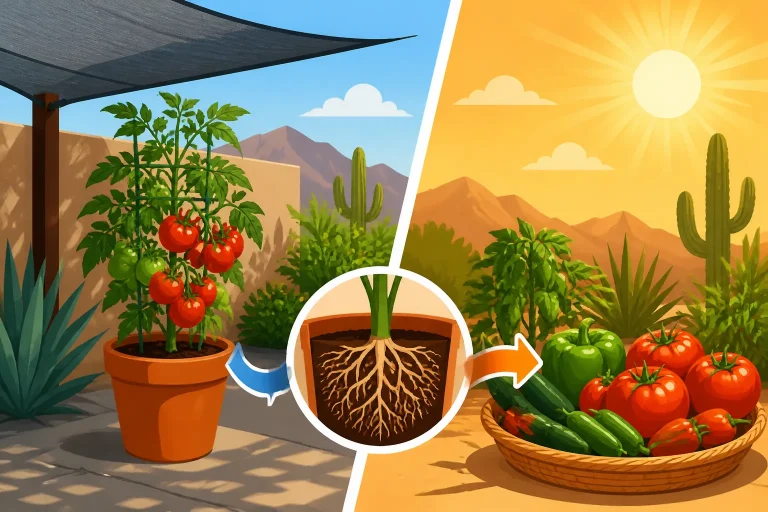
Shade cloth or temporary shade structures can reduce direct sun stress during the hottest part of the day. The amount of shade and the period it is used can affect growth, so avoid making a bed uniformly dark if the crops still need strong light. Focus first on protecting young transplants, recently sown crops, and plants showing clear heat stress. A structure that blocks afternoon sun may be more useful than one that reduces light throughout the day.
Mulch also helps buffer soil temperature and slow evaporation. Keep it a little away from stems to reduce the chance of moisture-related problems near the plant base. In containers, roots can heat and dry more quickly than roots in the ground; pots may need a different position, a larger volume of growing mix, or more frequent moisture checks. Summer Watering Schedules for Arizona Container Vegetables is relevant if your summer garden is in pots.
Decide when to stop
A struggling plant is not always worth carrying through summer. Remove crops that are diseased, badly damaged, or no longer producing, and clear fallen fruit and plant debris. If a bed is empty, cover or mulch the soil to reduce erosion and drying while you plan the next planting. Do not leave weeds to set seed simply because the vegetables have been removed.
There are two reasonable summer strategies: keep a small number of heat-tolerant crops going, or pause major planting and prepare for the cooler season. Neither is a failure. The right choice depends on your available water, time, shade, and willingness to manage heat stress. For help weighing those options, see Replanting or Waiting for Fall After Arizona Summer Heat.
Monsoon and Late-Summer Transition: Treat Rain as a Bonus
Monsoon weather can bring welcome cloud cover and rainfall, but it is not a dependable substitute for a garden irrigation plan. A storm may pass one neighborhood and miss another; rainfall can also arrive quickly, run off compacted soil, or leave beds unevenly wet. Check the soil after rain before deciding to skip irrigation. The surface may be damp while the root zone remains dry.
Heavy rain can cause additional problems. Waterlogged soil lacks the air roots need, and splashing rain can move soil or debris onto leaves. Clear drainage paths, avoid walking on saturated beds, and inspect plants for broken stems or lodged seedlings after a strong storm. If water collects in a bed, address drainage rather than assuming that a later dry spell will solve the issue.
Late summer is a transition period, but it can be awkward for planting. The air may remain hot even as the calendar suggests fall is approaching. Starting cool-season crops too early can expose seedlings to heat, while waiting too long can leave them with insufficient time to mature before colder weather or short days slow growth.
A practical approach is to start with a small sowing and monitor it. If seedlings establish well, expand the planting in stages. Use the seed packet’s maturity information as a planning aid, but remember that “days to maturity” is an estimate and may not account for heat stress, transplant recovery, or slower growth as days shorten. For more on interpreting those estimates, see Reading Seed Packets for Days to Maturity When Planning Fall Beds.
As summer heat begins to ease, prepare beds before the ideal planting period arrives. Remove spent crops, check irrigation, add only appropriate amendments, and organize seeds and transplants. A ready bed makes it easier to take advantage of a suitable spell of weather instead of losing time to cleanup and repairs.
Do not let a few cooler evenings make the decision by themselves. Soil can remain hot after afternoon temperatures begin to ease. Seeds may germinate poorly if conditions at planting depth remain unsuitable, while transplants can suffer from intense sun and warm nights. Watch both soil and weather, and use gradual, small plantings to reduce the risk of losing a whole bed.
Fall: Rebuild the Cool-Season Garden
Fall is the main opportunity to establish many cool-season vegetables in the low desert. As heat begins to soften, leafy greens, roots, peas, and brassicas become more practical. The challenge is choosing a start that gives each crop enough time to grow before winter conditions and shorter days slow it down.
Good candidates include lettuce, spinach, kale, broccoli, cabbage, carrots, beets, radishes, and peas. Each has different needs. Leafy greens can be harvested young or repeatedly, while root crops need a reasonably prepared bed for steady development. Brassicas often take longer to reach harvest, so check maturity estimates and avoid treating all cool-season crops as interchangeable.
For crop-specific suggestions, see Cool-Season Planting: What Belongs in an Arizona Fall Garden. The low-desert window differs from higher-elevation areas, so choose a calendar that fits your location rather than borrowing dates from a mountain garden.
Start with crops that have the longest runway
If several crops are on your list, prioritize those that need more time. Slow-growing or transplant-dependent crops are less forgiving of a late start than fast-growing greens or radishes. A mix of quick and slower crops can provide earlier harvests while the longer-season plants develop.
Direct-sown crops need consistent moisture while they germinate. In hot soil, seed may dry out quickly at the surface, so check the bed often until seedlings emerge. Once established, thin crowded seedlings according to the crop’s needs. Crowding can reduce airflow and limit the room roots need to develop, especially in carrots and beets.
Transplants also need careful establishment. A transplant may save time, but it is not automatically ready to thrive in hot, dry air. Set it into moist soil, water the root zone, and protect it from harsh afternoon conditions while it recovers. Avoid planting into a bed that dries out rapidly without a reliable way to check and replenish moisture.
Sow in stages and plan for harvest
Planting all of a quick-maturing crop at once can create a short-lived glut. Staggering sowings spreads harvests and reduces the risk that one hot spell, storm, or pest problem affects the whole crop. You can also combine crops with different maturity times, provided they have compatible light and water needs.
Plan for the harvest as well as the planting. Greens can often be picked a little at a time, while roots are usually harvested when they reach a useful size. Some vegetables tolerate light cold better than others, but no crop should be treated as immune to a hard or prolonged freeze. Check local freeze probabilities and be ready to protect vulnerable plants if conditions warrant. Arizona Frost Dates: Freeze Probabilities Across the State explains why frost timing is a risk window rather than a fixed day.
A low spot, an exposed bed, or a garden near a wall can experience different conditions from nearby sites. Frost risk is not uniform across a neighborhood. Pay attention to your own garden’s cold pockets and use local weather information as a guide, not as a promise.
Avoid common fall timing mistakes
One common mistake is sowing a full bed while the soil is still very hot. Seedlings may emerge and then stall or suffer under intense sun. Another is waiting until the weather feels comfortable, then finding that a slower crop has too little time to develop. Small test plantings can help you find the balance without risking a large amount of seed.
A second mistake is relying only on the listed days to maturity. That figure generally assumes suitable growing conditions; it does not promise a harvest by a particular date. Heat, cool nights, short days, transplant stress, and uneven watering can all alter the pace. If a crop is important to your meal plans, choose an appropriate planting window and consider a faster-maturing option where available.
For a seasonal checklist focused on sowing cool-season crops, see October Garden Calendar: Sowing Cool-Season Crops in the Low Desert. Use its advice alongside your local conditions, since fall weather does not arrive on the same schedule every year.
Winter: Harvest Cool-Season Crops and Plan the Next Cycle
Winter in the low desert can be productive, especially for vegetables that prefer cool weather. Established greens, roots, peas, and brassicas may continue growing, though cold nights and shorter days can slow development. A crop that grew quickly in mild autumn conditions may take longer to size up during winter. Allow for that slower pace when deciding whether to sow another round.
Harvest regularly, but avoid removing more foliage than the plant can replace. With leafy crops, picking outer leaves can extend the harvest when plants are healthy. Root crops can often remain in the ground for a period, but check their size and condition rather than assuming they will improve indefinitely. Remove damaged or rotting produce before it becomes a source of pests or disease.
Protect crops when cold threatens
Frost risk varies by garden and by year. Cold air can settle in low spots, while buildings and paved areas may hold warmth. A forecast or frost date is a probability, not a guarantee that every part of your yard will experience the same temperature. Keep track of exposed beds, sheltered corners, and places where cold has lingered in previous seasons.
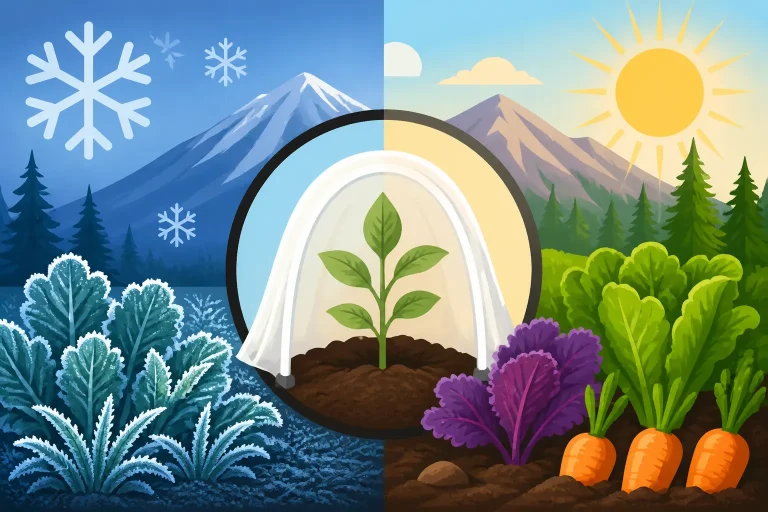
When cold is forecast, cover vulnerable plants with suitable frost protection and secure the cover so it stays in place. A cover should protect plants without crushing them. Remove or vent it when conditions warm, particularly if direct sun could cause the covered area to overheat. For more on the role and limits of covers, see Can Frost Blankets Let You Plant Seedlings Weeks Early?.
Protection can reduce risk, but it does not turn a tender crop into a reliably winter-hardy one. If a plant is near the end of its productive period, harvesting what is ready and planning for the next season may be more practical than trying to protect it through every cold event.
Use the slower season to improve the system
Winter is a good time to review what happened during the year. Which crops grew well? Which bolted, failed to germinate, or developed too late? Did irrigation wet the full root zone, or were some plants consistently stressed? Did shade help, or did it block too much light? These observations are more useful than a calendar alone because they reflect the conditions in your own yard.
Inspect the irrigation system before the next planting cycle. Look for clogged emitters, leaks, and areas where water runs off rather than soaking in. If the garden has different crop groups, consider whether the layout makes it possible to water them according to their needs. Setting Drip System Run Times to Soak Root Zones Deeply can help you think about water penetration rather than watering by the clock alone.
Winter is also a good time to rotate crop families where practical. Moving crops to a different bed may reduce repeated pest or disease pressure, although rotation cannot solve every soil or plant-health problem. Remove old diseased material appropriately, and avoid placing fresh crops into a bed that remains waterlogged or heavily compacted.
Plan a Four-Season Garden That Fits Your Yard
A low-desert garden does not need to produce every vegetable every month. It needs a sequence of crops that match the changing conditions, with room for rest, cleanup, and preparation. For some gardeners, that means a productive cool-season bed, a warm-season planting, and only a few heat-tolerant crops during summer. For others, containers, shade, or a more reliable irrigation layout make summer growing worthwhile.
Start by choosing crops for the next suitable window rather than trying to grow everything at once. Check your local calendar, seed packet guidance, soil condition, and forecast. Make a small planting if the timing is uncertain. Keep notes on what happened, and adjust the next round instead of treating a missed crop as proof that the garden cannot work.
A simple planning sequence can keep the work manageable:
- Identify whether your garden is truly in the low desert and choose a calendar that reflects its elevation and local conditions.
- Select crops suited to the coming conditions, not just the season name.
- Check soil moisture, drainage, and temperature before sowing or transplanting.
- Prepare irrigation and shade before seedlings are stressed.
- Plant in manageable batches and leave room for follow-up sowings.
- Watch for heat, cold, pests, and disease, and respond to the actual condition of the plants.
- Record planting and harvest results so you can refine the next cycle.
The most reliable calendar is a flexible one. It helps you anticipate the next planting opportunity, but it leaves space to respond to weather and the microclimate of your own yard. In the low desert, that flexibility is what makes year-round vegetable gardening practical.
Frequently Asked Questions
Can you grow vegetables in the low desert all year?
Yes, but not every crop grows well in every season. Cool-season vegetables and warm-season crops have different windows, and extreme summer heat limits many plants. A four-season garden often involves changing crops rather than keeping one planting going year-round.
What vegetables are easiest to start with?
Choose crops suited to the current season and your available space. Quick-growing leafy crops and radishes can offer an early result in cool conditions, while beans or squash may be more suitable in a warm planting window. Follow seed-packet guidance and start with a small number of crops.
Should summer vegetables be watered every day?
There is no single schedule that fits every soil, crop, and irrigation system. Check moisture in the root zone and adjust to weather and plant growth. Follow the system’s instructions and local guidance, and avoid relying only on a dry-looking soil surface.
Is monsoon rain enough for a vegetable garden?
Not necessarily. Rain can be uneven, run off, or wet only the surface. Check moisture below the soil surface after storms and irrigate if the root zone remains dry.
What should I do if I missed a planting window?
Check whether a faster-maturing crop still has time to finish in the remaining conditions. If not, prepare the bed and wait for the next suitable window. Did You Miss the Window to Plant Vegetables This Season? discusses how to choose between a late planting and waiting.
Disclaimer
This article is for general informational purposes only and does not constitute professional advice. Laws, prices and regulations vary by location and change over time. Consult a qualified professional for guidance on your specific situation. Arizona Gardening Guide is not a government agency and is not affiliated with any university extension, state department of agriculture or other government agency.