Choosing the Right Arizona Planting Calendar for Your Area
Arizona gardeners often find a planting calendar that seems right for Phoenix but wrong for their own yard, or one meant for a mountain town that misses their local conditions. The solution is to choose by growing conditions, not state borders alone. This guide explains how elevation, frost, heat, soil, and garden setup affect calendar choices—and how to turn a general schedule into a practical plan.
Why Arizona gardeners need a local planting calendar
Arizona’s range of elevations and climates makes a single statewide planting calendar a poor fit for many gardens. A crop that enjoys cool weather in a higher-elevation community may struggle in a low-desert bed warming under intense sun. Even nearby yards can differ: a sheltered patio, a north-facing slope, and an open garden exposed to cold air may each create a different planting window.
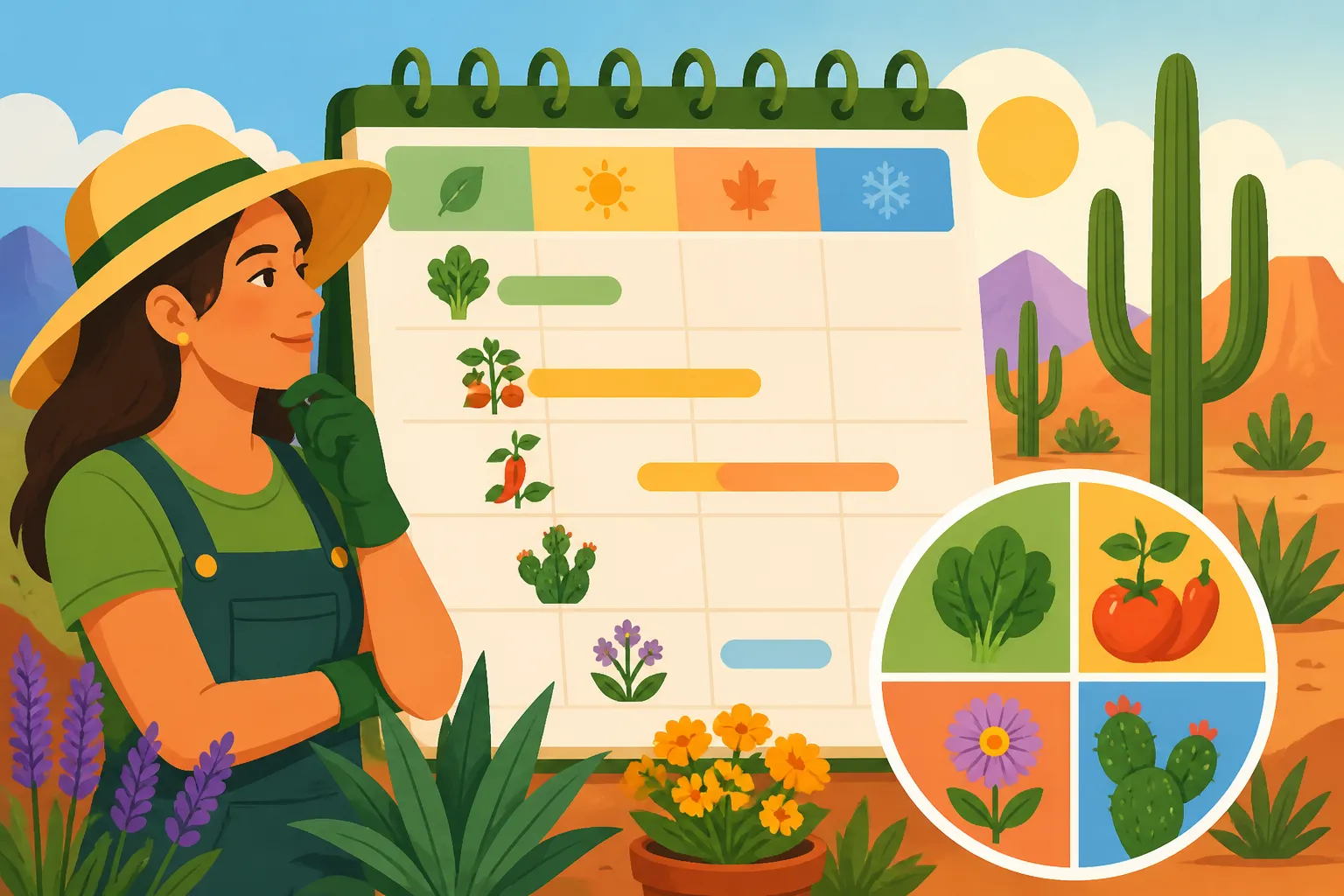
A calendar is most useful as a starting point. It helps narrow down when to sow seeds, set out transplants, or expect a harvest, but it cannot account for every yard’s exposure, soil moisture, or weather. Treat its dates and seasonal guidance as estimates to check against what is happening in your garden.
The University of Arizona Cooperative Extension provides a detailed garden planting calendar for selected fruits and vegetable in Maricopa County, Arizona. That resource can be a sensible starting point for gardeners whose conditions match the county’s intended audience and the crops it covers. It is not automatically the right schedule for every Arizona community, crop, or microclimate.
The University of Arizona Cooperative Extension page lists a vegetable planting and harvest times guide for 3000 to 6000ft Elevations (as of November 2026). That offers a different kind of starting point for gardeners whose growing conditions fall within the guide’s stated elevation range. Check the guide’s scope and crop list before using it to plan your beds.
For the rest of the state, look for a calendar that describes the relevant region, elevation, and crop type. If a calendar is labeled only with a broad location or a general season, use it cautiously. It may still help you understand the order of seasonal tasks, but local frost exposure and heat can shift the usable window.
A useful calendar should answer practical questions: when to sow, when to transplant, how long a crop may take to mature, and what conditions could shorten the season. If it offers only a date without context, pair it with local observations and other region-specific guidance. For an overview of how regional differences affect crops, see Arizona Elevation Vegetable Guide: Warm and Cool Seasons.
What makes one Arizona planting calendar different from another
Location matters, but it is not the only factor. The most useful calendar is the one that reflects the conditions your plants will actually experience. Before following a schedule, consider the broad features of your site and how they could shift planting or harvest timing.
Elevation and regional climate
Elevation influences how quickly temperatures warm in spring, how long warm weather lasts, and how often cold conditions can interrupt growth. A community at a higher elevation may have a shorter warm-season window than a low-desert community. The difference can affect whether a crop has enough time to produce before heat or cold arrives.
A county or city name can help locate a starting calendar, but elevation within that area may vary. Look for resources that identify the elevation range or climate area they cover. If the resource is intended for a different elevation, it may still be helpful for general crop information, but its planting schedule may not match your site.
Frost exposure and cold-air movement
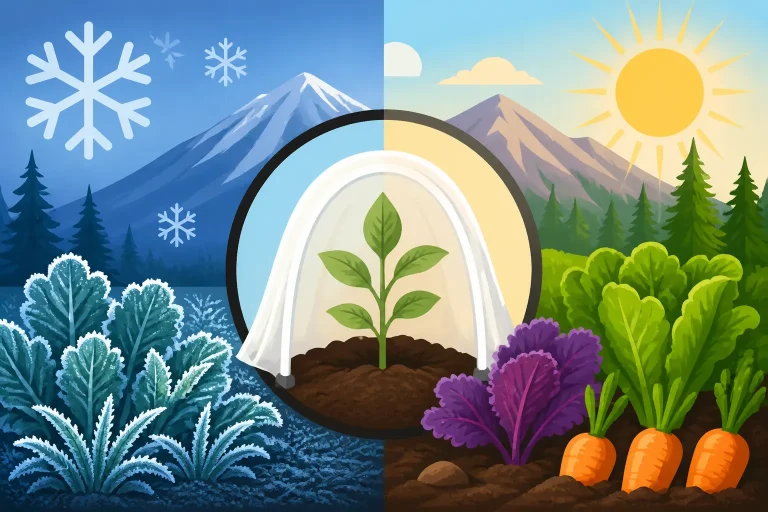
Frost risk is not uniform across a town. Cold air can settle in low spots, while a protected slope or a wall may create a warmer pocket. Open sites can be more exposed to wind, and enclosed spaces can hold warmth differently from a large garden plot. A calendar cannot capture these small-scale differences unless it is designed for the specific site.
Use local frost guidance as a probability, not a promise that cold weather will begin or end on a fixed day. A predicted frost window can help you decide when to protect tender plants, but actual weather varies. Keep a simple record of cold nights and plant damage in your yard; over time, those observations can help you interpret a general calendar more realistically. For guidance on interpreting freeze risk, see Arizona Frost Dates: Freeze Probabilities Across the State.
Heat, sun, and reflected warmth
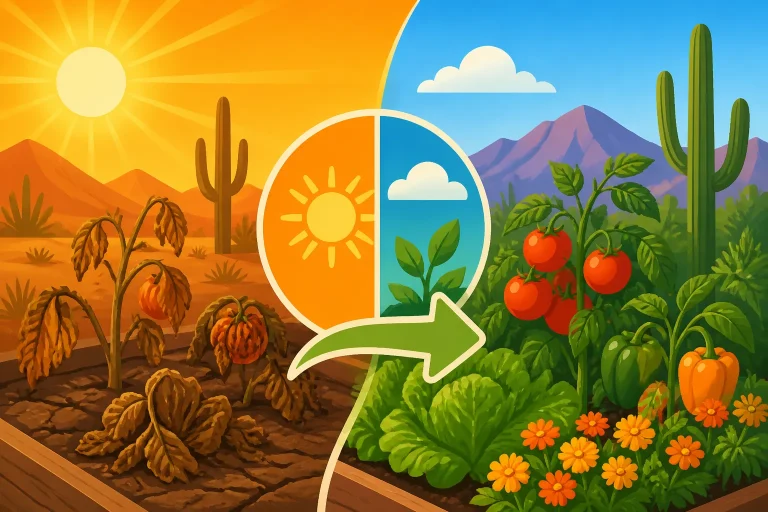
In hot parts of Arizona, heat can become the limiting factor even when there is no frost threat. A planting calendar may show a crop’s season, but high temperatures can reduce flowering, affect fruit set, or make seedlings difficult to establish. A bed beside a sun-facing wall may heat more quickly than one with open exposure, while afternoon shade can change how long plants remain comfortable.
Do not use one yard’s success as proof that the same schedule will work in another yard. Consider the length and intensity of direct sun, nearby walls or paving, and the time of day when the bed is hottest. When calendar advice seems to conflict with what your plants experience, evaluate the site before changing the date alone. How Afternoon Shade and Potted Roots Shift Harvest Days explains why growing conditions around a plant can influence how a schedule plays out.
Soil and water
A calendar may assume that soil is workable and moist enough for sowing or transplanting. Heavy, saturated soil can make planting difficult and can contribute to seed or root problems. Dry soil can also make a suggested planting window impractical if new plants cannot establish consistently.
Check the bed itself instead of relying only on the calendar. Soil that crumbles and drains may be ready for sowing; soil that is sticky or waterlogged may need more time. The texture of a raised bed, a container, and an in-ground plot can differ, so treat each growing space as its own planting environment. Getting Desert Soil Ready for a First Vegetable Garden can help with the preparation questions that arise before you follow a schedule.
The garden’s design
Containers, raised beds, and in-ground gardens do not behave identically. A pot can heat and dry more quickly than the surrounding ground. A raised bed may warm earlier but also lose moisture more rapidly. A large in-ground plot may buffer temperature changes differently from a narrow bed beside paving.
A calendar designed for field or in-ground conditions may not transfer directly to a patio garden. Likewise, a schedule for outdoor beds may not fit a protected greenhouse or a covered growing space. If you garden in containers, use the calendar to identify the likely season, then adjust your expectations based on the container’s exposure, drainage, and moisture needs. Summer Watering Schedules for Arizona Container Vegetables covers the water-management side of container growing.
| Garden condition | What to check | How to use a calendar |
|---|---|---|
| Higher-elevation site | Local cold exposure and the length of the warm growing period | Favor a schedule intended for a similar elevation and pay attention to crop maturity time |
| Low-desert site | Heat, sun exposure, and the seasonal cooling or warming of the bed | Use a low-desert schedule as a starting point, then account for shade and reflected heat |
| Frost-prone yard | Cold-air pooling, open exposure, and sheltered areas | Use local freeze guidance and keep protection plans flexible |
| Container garden | Pot exposure, drainage, and how quickly the mix dries or warms | Use outdoor calendars for seasonal context, not as a guarantee of container performance |
| Raised bed | Soil warmth, moisture retention, and drainage | Check the bed’s actual condition before sowing or transplanting |
| Greenhouse or covered bed | Ventilation, sun exposure, and temperature inside the structure | Compare the protected environment with the outdoor schedule before planting |
The table is a way to sort the decision, not a set of fixed rules. Two gardens in the same broad region may still have different conditions. When you are unsure, start with the closest regional calendar and make a small planting rather than committing the entire bed at once.
How planting windows shift across Arizona
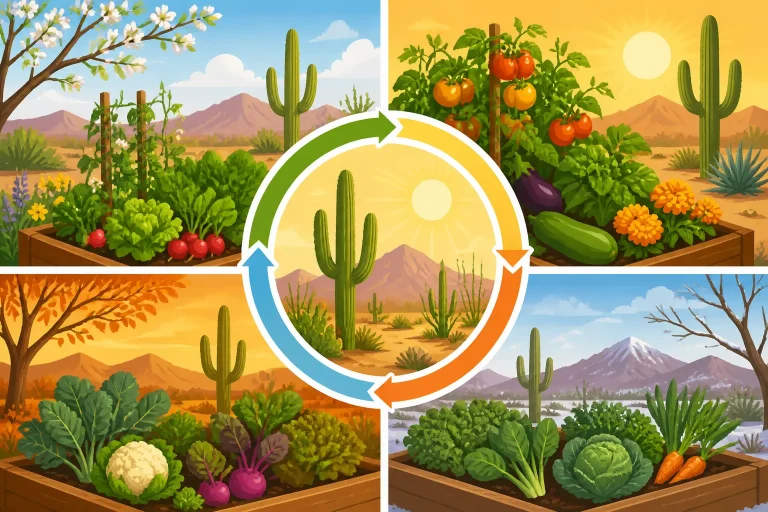
Arizona planting calendars often make more sense when grouped by growing conditions rather than by a simple north-to-south line. Regional labels can be useful, but there is no sharp boundary where one calendar suddenly stops applying and another becomes perfect. A change in elevation, exposure, or local terrain can matter as much as distance between communities.
Low-desert gardens
Low-desert gardeners generally plan around changing heat, rather than relying on a single long, comfortable growing period. The calendar may distinguish crops suited to cooler conditions from those that need warm soil and warmer weather. The seasonal transition matters: sowing a cool-season crop too late can expose it to increasing heat, while planting a tender warm-season crop too early can leave it stalled in cold soil or damaged by a cold night.
Use the calendar to understand which direction conditions are moving. Are nights becoming milder? Is the soil warming? Is the garden approaching a period when intense heat is likely to limit growth? These questions help you decide whether a planting window is opening or closing. For a closer look at seasonal shifts in the low desert, see Low-Desert Planting Calendar: Two Main Growing Seasons.
A county calendar can be useful if it fits your location and the crops you intend to grow. Still, the calendar should not override conditions in your yard. A sheltered, shaded spot might allow a different planting approach than a sunny garden with reflected heat, while a container can become hotter and drier than an in-ground bed.
Mid-elevation gardens
At mid elevations, the planting season may not line up neatly with either a low-desert schedule or a high-country calendar. Spring warmth, lingering cold, summer heat, and the return of cool weather can all affect when a crop has time to mature. Calendars for these areas may need to account for both early-season cold and a later summer slowdown.
A regional schedule can give you the likely planting sequence, but check the exact area and elevation it describes. A calendar for a nearby town may be a better match than a statewide resource, yet even that may not reflect a yard in a colder pocket or on a warmer slope. If your growing conditions fall between the categories used by available calendars, compare neighboring regional guidance and prioritize the one that best matches your site’s temperature patterns.
Higher-elevation and mountain gardens
Higher-elevation gardeners often need to be particularly attentive to the time a crop needs to mature and the chance of cold weather returning. A crop may have a short period of favorable warmth before autumn conditions arrive. Starting too late can leave it unfinished; starting too early can expose it to cold soil or frost.
For these gardens, a calendar’s maturity information is as important as its planting window. Choose crops that fit the length of the local growing period, and avoid assuming that a warm spell means the season has permanently changed. A protected spot may help, but it does not eliminate the need to monitor conditions. High-Country Vegetable Planting Dates for Northern Arizona and Managing Short Seasons and Frost Risk in the Arizona High Country offer more focused advice for these situations.
When your garden sits between regional categories
Some gardeners cannot find a calendar that names their community or matches their exact elevation. In that case, treat the nearest regional calendar as a reference rather than a prescription. Compare its seasonal pattern with the conditions in your yard, and look for guidance that matches the crop and the main risk you face, such as frost, heat, or a short period of favorable growing weather.
You can also ask whether a calendar is built around a community, an elevation band, a county, or a particular crop group. Those labels describe different kinds of coverage. A regional guide may help with seasonal timing, while a crop-specific page may explain how long a plant takes to mature or how to sow it. The strongest plan usually uses both kinds of information without assuming that either one covers every detail.
For help finding the right regional resource, see Finding Arizona Planting Guides by Elevation and County. If the guide’s coverage is unclear, check the official page that hosts it and use its stated audience and crop list to judge whether it fits.
How to read a planting calendar without treating it as a promise
A planting calendar is easier to use when you understand what its entries mean. The same calendar may include planting dates, harvest estimates, recommended methods, or crop-specific notes. These are not interchangeable. Before you act on a calendar, identify the type of guidance it gives and the assumptions behind it.
Separate planting time from harvest time
A sowing window tells you when a crop may be started under the conditions covered by the calendar. A harvest estimate tells you when it may be ready to pick if it grows well. Those estimates can be affected by temperature, water, soil, sunlight, variety, and the way a crop is started.
Starting with seed directly in the garden can take a different amount of time than setting out a transplant. A transplant may have an established head start, while direct-sown seed must first germinate and develop in place. The calendar may distinguish these methods or may assume only one. Check the notes before using a harvest estimate to plan a succession or clear a bed for another crop. Direct Sowing vs. Starting Indoors: Which Arizona Crops Need Starts? provides more context on choosing between those approaches.
Check the crop and variety
A calendar’s crop name may cover plants with different growth habits or maturity speeds. Read the seed packet or plant tag and compare its instructions with the schedule. A variety selected for a shorter season may be more suitable where the growing window is limited; a variety that needs extended favorable weather may be a poor fit even if its planting date appears on a regional calendar.
Do not assume that every variety of a crop will perform the same way. The calendar may not name varieties at all, and a generic entry may be intended to summarize a broad group. Treat variety-specific information as an important complement, especially when you are gardening at an elevation where the time available for growth is limited.
Look for assumptions and cautions
Some calendars are designed around a specific location, while others cover a broad region or an elevation range. They may assume a typical garden bed, outdoor conditions, or a certain planting method. They may also include notes about soil temperature, frost protection, or heat. Those details can determine whether a date is useful for your yard.
When a schedule conflicts with a seed packet, a local weather pattern, or the soil in your bed, pause before planting. Ask what each source is describing. A seed packet may offer broad crop instructions; a regional calendar may account for local seasonal patterns; a soil reading may show whether your bed is ready right now. Combining these clues is more reliable than following one date without context.
Use planting dates as windows
A window is a period when conditions are likely to suit a crop, not a guarantee that every day in it is suitable. Soil can remain cold after the air feels warm. A forecast cold snap can change the risk for tender seedlings. An unusually hot stretch can make a normally favorable period stressful.
Check conditions close to planting. For warm-season crops, soil warmth can matter as much as daytime air temperature. For cool-season crops, heat arriving early can cut short the period of useful growth. Checking Soil Warmth Before Sowing Desert Vegetable Seeds explains why the bed itself deserves attention, not just the calendar.
A practical way to choose and use your calendar
If you are deciding between several schedules, use a consistent process. The goal is not to find a calendar that predicts your yard perfectly. It is to identify the most relevant starting point and then adapt it using local conditions and crop information.
- Describe your site. Note your community or region, approximate elevation if known, exposure to sun and wind, and whether the bed is in-ground, raised, in a container, or protected. Include obvious cold pockets, nearby walls, and reflective paving.
- Identify the main climate challenge. Decide whether the bigger concern is frost, high heat, a limited growing window, or soil that warms and drains slowly. The answer can differ between crops in the same garden.
- Find the closest regional calendar. Look for a resource that states the area or elevation it covers. Use Arizona Planting Calendar by Elevation and Zone as a starting point for comparing regional approaches, while confirming the page’s stated scope before relying on it.
- Check crop coverage and planting method. Make sure the calendar includes the crop you want and determine whether its advice assumes direct sowing, transplants, or another method.
- Compare the recommendation with current conditions. Check the soil, the forecast, and the plants’ likely exposure. If the conditions do not fit the calendar’s assumptions, wait, protect the crop, or choose a more suitable planting approach.
- Start with a manageable planting. When uncertainty is high, plant a portion of the bed first. This limits the risk of losing the entire crop if the timing proves off and gives you local feedback for future plantings.
- Keep notes. Record when you sowed or transplanted, how the weather behaved, and when plants started producing. Note where each crop grew, since a shaded bed and a hot patio can behave differently.
- Revise the plan. Use what happened to interpret the next calendar window. If a crop struggled from cold soil, heat, or insufficient time to mature, adjust the location, variety, method, or timing rather than copying the same schedule without changes.
This process can be simple. A notebook or garden chart is enough to track the information that matters. Record only details that can help you make a decision later: crop, planting method, bed location, approximate timing, and the outcome. Over time, your own records become a useful local reference, especially when published calendars cover a broader region than your yard.
Avoid changing several factors at once when a planting fails. If you alter the timing, variety, watering, and location together, it can be hard to tell which change helped. Instead, make a focused adjustment and compare the result with your notes. Gardening always involves variation, but a small record can turn a frustrating surprise into information for the next planting.
Match the crop plan to the season and the site
Once you have selected a calendar, use it to shape a realistic crop plan. A planting schedule is more helpful when it supports decisions about what to grow, where to put it, and how much to plant. A calendar that lists many possible crops does not mean every crop is a good fit for every yard.
Choose crops for the time available
Consider how long a crop needs to grow and whether the local conditions are likely to remain favorable for that period. In a short growing window, a crop with a long maturity period may be risky. In a hot location, a crop that prefers cooler conditions may need to finish before severe heat arrives. In a frost-prone area, a tender crop may need protection or a later start.
A maturity estimate is not a promise. It can vary with the variety, growing method, soil, and weather. Use it as a comparison tool: if one crop takes longer than another, it may be a less secure choice when the season is already constrained. Selecting Fast-Maturing Crops for Arizona’s Split Seasons offers further help with this decision.
Plan around what you want to harvest
Think about how much of each crop you can use and when you want it available. A calendar may recommend a planting window, but a large planting can create more produce than a household can use at once. Staggering sowings can spread the harvest, provided the later planting still has enough favorable weather to mature.
For some crops, a later sowing may not be worth the risk if heat or cold is approaching. For others, staggered planting may help avoid a short-lived glut. Use the calendar to check whether successive plantings remain within the recommended season. Succession Sowing in Arizona to Prevent Summer Harvest Gluts explains how to think about spacing plantings over time.
Plan for protection without assuming it removes risk
Covers, shade, and sheltered locations can change a plant’s exposure, but they do not make weather irrelevant. A frost cover may reduce cold stress under suitable conditions, yet the forecast and the plant’s sensitivity still matter. Shade can ease intense sun but may slow growth if it reduces light too much. A greenhouse or covered bed may warm quickly and require careful ventilation.
Treat these measures as tools for managing conditions, not guarantees that a crop will thrive outside its usual season. Before planting early or extending a season, ask whether you can monitor the site and provide appropriate protection when conditions shift. Using Greenhouses and Covers for Spring Frost Protection can help with the choices involved in protecting crops.
Keep the garden adaptable
A useful plan leaves room to respond. If weather disrupts a planting window, there may be another crop that better fits the remaining season. If seedlings fail, the next step might be a later planting, a transplant, or a decision to wait for a more suitable season. Did You Miss the Window to Plant Vegetables This Season? can help you consider what to do when the preferred window has passed.
Do not feel obliged to plant every crop shown on a calendar. Select crops that match the conditions you can provide, the time you have to care for them, and the season you want to use. A smaller plan that fits your yard is often more practical than a long list copied from a calendar designed for another place.
Common mistakes when choosing an Arizona planting calendar
A few habits can make an otherwise useful calendar misleading. They are easy to correct once you know what to look for.
Using a statewide date as a local forecast
A date that works as a broad reference may not fit a yard with different elevation, exposure, or frost risk. Instead of asking whether a date is correct for Arizona, ask which location and growing conditions it represents. Then compare those conditions with your own.
Mixing advice from different regions
Combining schedules can lead to contradictory recommendations. One calendar may describe a low-desert season, while another is intended for a higher, cooler region. Before combining advice, check whether each source is addressing the same crop, planting method, and climate. If the schedules differ, choose the one that best matches your garden rather than averaging their dates.
Ignoring the difference between air and soil conditions
A warm afternoon does not necessarily mean the bed is ready for sowing. Soil warmth, moisture, and drainage influence germination and early root growth. Check the bed directly and follow crop-specific guidance. If conditions are not suitable, waiting can be a better choice than planting because a calendar says the window has opened.
Assuming every yard in one community behaves alike
A garden beside a heated wall, a shaded courtyard, and an open low-lying bed can have different temperature and moisture patterns. Use the community calendar to set expectations, then make a more local judgment based on your yard. Record differences between beds so you can place future crops where they have the best chance.
Treating a harvest estimate as a fixed deadline
A crop may mature more slowly in cool conditions or suffer when heat arrives. A calendar’s harvest estimate should help with planning, but inspect the plant itself and consider how its growing conditions have varied. When timing is important, avoid scheduling a following crop so tightly that a small delay leaves the bed unused or the new seedlings poorly timed.
Planting too much before testing the timing
A calendar is a useful guide, but uncertainty remains when the site, variety, or method differs from its assumptions. A trial planting can reveal whether the schedule fits your yard before you commit all available space. This is especially useful when you are trying a new crop or adapting a schedule from a nearby region.
Frequently Asked Questions
Can one planting calendar work across all of Arizona?
A statewide calendar can offer general orientation, but local elevation, frost exposure, heat, and garden setup can change the useful planting window. Choose guidance that matches your region and check it against conditions in your own yard.
What should I do if my community is not listed?
Look for a calendar that covers a similar elevation and climate, then compare its assumptions with your garden. Use crop-specific guidance and local observations to refine the schedule rather than treating a nearby town’s dates as exact.
Should I follow the calendar or the weather?
Use the calendar to identify a likely window and the weather and soil to decide whether conditions are suitable now. A sudden cold spell, unusually hot weather, or soil that is too wet can make a calendar date impractical.
How can I tell whether a calendar fits my garden?
Check which area or elevation it covers, which crops it includes, and whether it assumes direct sowing, transplants, or protected growing conditions. Compare those details with your location, bed type, and the main climate challenge at your site.
Sources
- University of Arizona Cooperative Extension — Vegetable Planting Calendar for Maricopa County | UA Cooperative Extension (checked November 15, 2026)
- University of Arizona Cooperative Extension — Edibles | UA Cooperative Extension (checked November 15, 2026)
Disclaimer
This article is for general informational purposes only and does not constitute professional advice. Laws, prices and regulations vary by location and change over time. Consult a qualified professional for guidance on your specific situation. Arizona Gardening Guide is not a government agency and is not affiliated with any university extension, state department of agriculture or other government agency.