Did You Miss the Window to Plant Vegetables This Season?
Missing a planting window can make an Arizona garden feel like it is already behind. But the right next step depends on where you garden, what you hoped to grow, and how much time remains before heat or frost. Use this approach to decide whether to plant now, switch crops, protect a late planting, or wait for the next season.
First, work out which window you missed
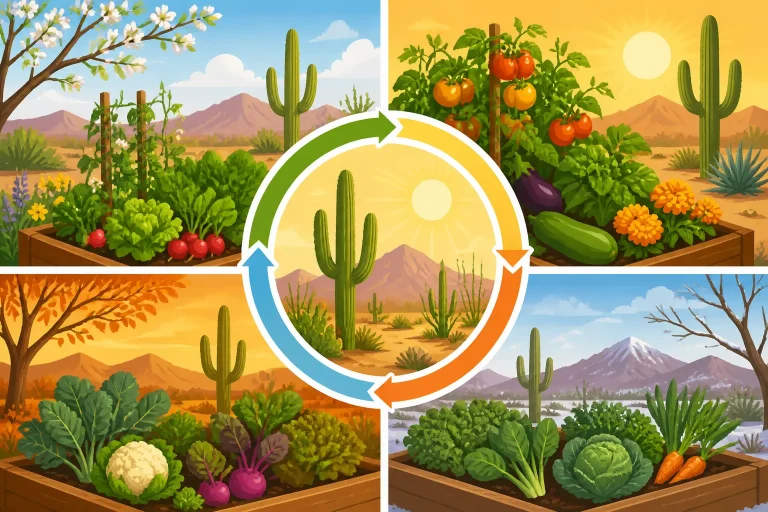
Arizona does not have one statewide vegetable calendar. Elevation, local temperatures, and yard conditions can shift planting opportunities substantially. A missed window in a low-desert garden may mean waiting for the next cool- or warm-season period; at higher elevations, it may mean deciding whether a short-season crop can finish before fall cold arrives.
Start by identifying the growing conditions for your actual garden, not just your city or a calendar date. Consider your elevation, the amount of direct and reflected sun, nearby walls or pavement, and whether your garden sits in a low spot where cold air collects. These details can make two gardens in the same general area behave differently. For a broader look at regional differences, see Choosing the Right Arizona Planting Calendar for Your Area and Arizona Elevation Vegetable Guide: Warm and Cool Seasons.
Next, name the kind of window you missed. Arizona gardeners often face three different timing problems:
- A cool-season window: The crop needs moderate conditions to grow well, but warm weather is arriving or has already arrived.
- A warm-season window: The crop needs warm soil and weather, but a fall freeze may arrive before it matures.
- A local opportunity: The general season is still suitable, but the bed is too wet, too cold, or too exposed to heat for good establishment.
A calendar can point you toward likely planting periods, but it cannot tell you exactly what is happening in your bed. Soil temperature and moisture, local forecast conditions, and the crop’s time to maturity help fill that gap. If the calendar suggests planting but the soil is cold and saturated, sowing may fail. If the usual window has passed but the forecast and remaining season still suit a fast crop, a late planting may be reasonable.
It also helps to distinguish between a preferred window and a last possible opportunity. A preferred window usually gives a crop time to establish and produce under conditions it tolerates. A last opportunity is a gamble: the plant may grow, but temperature stress, slow development, or an early weather change could cut the harvest short. If a full harvest is essential, choose the next suitable window. If you are comfortable with a smaller or uncertain harvest, a carefully selected late planting may be worth trying.
Think about the goal, too. Are you hoping for a full season of fruiting crops, a quick harvest of leaves or roots, or simply something growing in an open bed? Those goals call for different decisions. Missing the best period for one crop does not mean the whole garden season is lost.
Decide whether a late planting has enough time
The key question is not just “Can I plant this?” but “Can it reach a useful harvest before conditions become unsuitable?” To answer, compare the crop’s expected time to maturity with the likely time left in its favorable growing conditions.
Seed packets and plant tags usually give a days-to-maturity estimate, but that figure is a planning aid rather than a promise. Read the description carefully to see whether it counts from sowing or from transplanting. Conditions that slow growth—such as cold soil, very hot weather, insufficient light, or inconsistent moisture—can extend the wait. A transplant may save the time needed for germination and early seedling growth, but it still needs suitable conditions to establish.
| What you want to grow | What to check before planting late | Possible adjustment |
|---|---|---|
| Leafy greens | Whether warm weather will cause stress or poor-quality growth | Sow a small amount, use a more suitable protected spot, or wait for cooler conditions |
| Root crops | Whether there is time for roots to develop and whether the soil is workable | Choose a faster-maturing crop or postpone until the next compatible window |
| Fruiting warm-season crops | Whether warm conditions will continue long enough for flowering and fruit development | Use a healthy transplant if appropriate, or wait rather than risk a poor late start |
| Cool-season crops at higher elevation | Whether the crop can grow before fall cold slows or stops it | Compare expected maturity with local frost risk and consider protection |
| A bed with uncertain conditions | Whether soil temperature, drainage, and exposure support germination and growth | Check the bed first and correct the limiting condition before sowing |
For late planting, favor crops that have a realistic path to a harvest in the time available. “Short season” is relative: a crop that finishes quickly in one part of Arizona may still struggle in a colder, higher-elevation garden or during intense heat. Look for the maturity information on the seed packet, then ask whether the local conditions will help or hinder that estimate. Selecting Fast-Maturing Crops for Arizona’s Split Seasons offers more detail on choosing crops when the growing period is limited.
If you are deciding between direct sowing and transplants, consider both the time saved and the stress added. A transplant can shorten the early part of the schedule, but a plant moved outdoors during extreme heat or cold may stall, wilt, or fail to establish. Direct sowing avoids transplant shock for crops that are suited to it, but germination can be slow or uneven if soil conditions are wrong. Direct Sowing vs. Starting Indoors: Which Arizona Crops Need Starts? explains how to think through that choice.
Be conservative with a late planting of crops that need a long stretch of favorable weather, especially if the local season is closing quickly. It is easy to count backward from an expected freeze or heat period and assume the crop will mature just in time. In reality, plants may grow more slowly than the packet estimate, and harvest does not necessarily begin on the first listed maturity day. If the calendar leaves little margin, a smaller, quicker crop—or a decision to wait—may be more satisfying than trying to force a full-sized planting.
Match the response to your Arizona region
The same missed planting window calls for different choices across the state. A low-desert gardener may have opportunities in more than one growing season, while a high-elevation gardener may have a shorter period for warm-season crops and more concern about fall frost. Mid-elevation sites can sit between those patterns, with local conditions determining how much flexibility the gardener has.
In low-desert gardens
Low-desert gardening often involves two main growing periods, one favoring cool-season crops and another favoring warm-season crops. If you miss a favorable period for one group, do not assume that planting it late will work just because there is still room in the bed. A cool-season crop planted as temperatures rise may struggle even if it has weeks left to grow. A warm-season crop planted as conditions cool may establish but fail to finish before cold weather slows it down.
Instead, identify which type of season is approaching. If conditions are shifting toward heat, consider whether a heat-suitable crop can use the bed, or leave the space open for the next planting opportunity. If cooler conditions are coming, plan for crops that grow well then rather than rushing a heat-loving crop into declining temperatures. Low-Desert Planting Calendar: Two Main Growing Seasons and Spring vs Fall: Timing Your First Low-Desert Garden can help you frame that transition.
If the crop you missed is still important to you, waiting may be more efficient than trying to keep it alive through unsuitable weather. Use the time to prepare the bed, check irrigation, and organize seed or transplants for the next appropriate season. For help thinking through a missed low-desert opportunity, see Replanting or Waiting for Fall After Arizona Summer Heat.
At higher elevations
At higher elevations, the main concern is often whether a warm-season crop has enough time to grow before cold weather returns. A late start might still work for a quick crop, but slower crops can be caught by cool nights and early fall freezes. A warm spell does not guarantee that the whole remaining season will stay warm.
Use local frost information as a risk estimate, not a fixed deadline. Frost probabilities vary from year to year, and an individual yard may be colder or warmer than a weather station. Arizona Frost Dates: Freeze Probabilities Across the State explains how to interpret those estimates, while How to Plan Around Frost in High-Elevation Arizona Gardens focuses on planning around the risk.
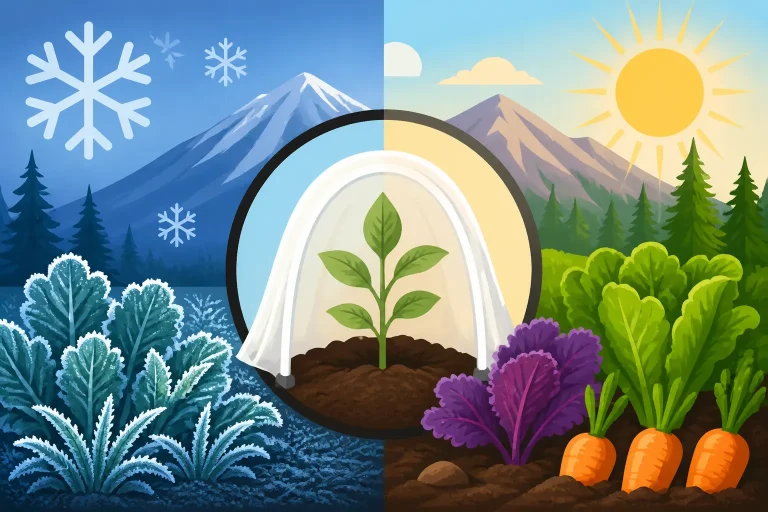
When time is tight, check the crop’s expected maturity, the length of your likely growing period, and whether you can protect it from brief cold spells. A cover may reduce exposure in some situations, but it cannot make an unsuitable season reliably suitable. If the timing is too close, prioritize crops that mature sooner or save the space for a planting better matched to the coming conditions. For region-specific timing, see High-Country Vegetable Planting Dates for Northern Arizona.
In mid-elevation and variable sites
Some Arizona gardens do not fit neatly into a low-desert or high-country pattern. Elevation, exposure, and local cold-air movement can create a longer or shorter planting opportunity than a broad regional calendar suggests. A sheltered site near a wall may warm earlier than an exposed bed; a low pocket may experience colder conditions than a nearby slope.
Compare your experience with local information, but do not treat one year’s success as a guarantee. Keep notes on when soil became workable, when seedlings established, and when heat or cold affected crops. Those observations can help you adjust future plans. When to Start Your Garden by Arizona Elevation and Camp Verde vs. Prescott: Navigating Elevation in the Garden discuss how elevation changes the timing picture.
Choose among planting now, switching crops, or waiting
After checking the season and crop timing, choose one of four practical responses. There is no rule that says every open bed must be planted immediately. A deliberate pause can prevent wasted seed, water, and effort.
Plant now, but keep the trial small
A small trial is useful when the crop may still have time but the outcome is uncertain. Sow or set out only a portion of the bed, then watch how it establishes before committing more space. This approach is especially helpful when local conditions differ from the general calendar or when you have not tested a late planting in that spot before.
Keep the planting simple. Prepare a suitable seedbed, water consistently without leaving the soil saturated, and check for signs that seedlings are struggling. If conditions turn unfavorable, you will have limited the loss and can use the rest of the space for another plan. A small planting also helps you learn whether the crop’s maturity estimate is realistic in your yard.
Switch to a crop that fits the conditions ahead
If the original crop’s preferred weather is ending, choose something better matched to the next part of the season. This is often the clearest way to keep a garden productive without forcing a crop beyond its comfort zone. For example, a garden moving into hotter weather may need a different crop choice from one entering a cooler period. The right replacement depends on elevation, exposure, and the time available.
Before switching, check that the new crop itself has enough time. Do not replace one overly late planting with another. Compare maturity estimates, confirm that the soil is suitable, and consider whether the plant will face heat or cold before it can produce. Starting Mid-Season: Which Crops Can Still Finish in Time? can help you evaluate a mid-season change.
Wait for the next suitable window
Waiting makes sense when the weather is already moving away from what the crop needs, when a planting would have little time to mature, or when the bed’s soil conditions are poor. It is not wasted time if you use it to prepare. Remove finished plants, clear weeds, repair irrigation problems, and improve the bed’s readiness without making changes that the soil does not need.
Use the pause to plan the next planting more carefully. Check the local planting calendar, set aside the right seeds, and decide whether you will use direct sowing or transplants. If your schedule is the main obstacle, starting seeds indoors may be an option for suitable crops, but the timing and conditions must still match the crop’s needs. When to Start Seeds Inside to Beat the Arizona Frost or Summer Heat covers that planning decision.
Protect a late planting only when protection can help
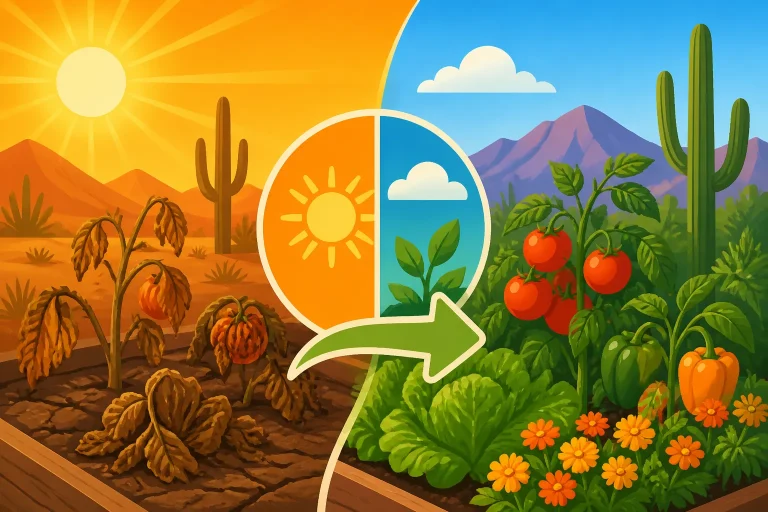
Covers, shade, and careful site choice can reduce some forms of stress, but they do not erase seasonal limits. Frost protection may help a crop through a brief cold event; shade can reduce harsh exposure during hot conditions. Neither guarantees that a crop will produce well if it is planted too late or is fundamentally mismatched to the season.
Protection also needs attention. A cover can trap unwanted heat, reduce airflow, or become a problem if it is not secured or monitored. Shade can help during intense sun but may also reduce light more than the crop can tolerate. Choose protection for a specific risk, then check the plant and the conditions regularly. For more on frost covers, see Can Frost Blankets Let You Plant Seedlings Weeks Early?.
Prevent the same timing problem next season
Missing a planting window is often a planning issue, but it can also happen because weather, work, travel, or garden preparation gets in the way. A simpler calendar system can make the next season easier without requiring a rigid schedule.
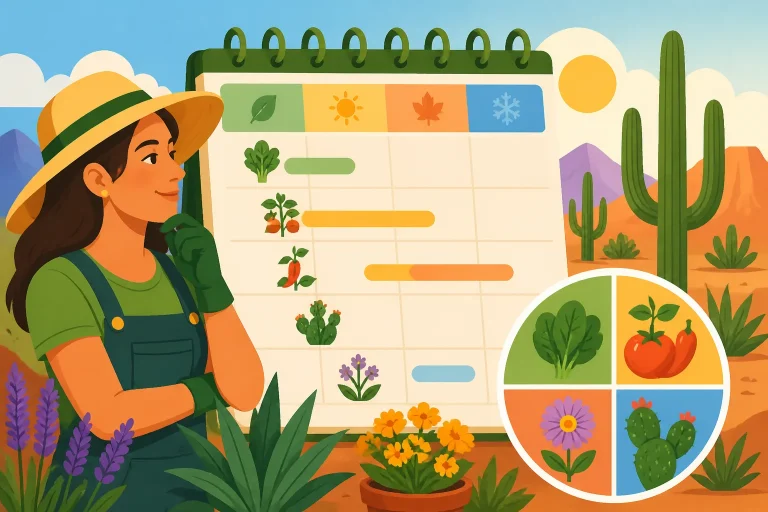
Start with a short list of crops you genuinely want to grow. For each crop, record its preferred season, how it will be planted, the maturity estimate, and any local constraint such as heat, frost, or limited garden space. A long list is not useful if it makes the schedule hard to manage. A few well-timed crops are often more rewarding than many hurried plantings.
Build in a margin. Do not plan every crop for the final edge of its likely planting period. Weather varies, and garden tasks take longer than expected. A little flexibility gives you room to wait for workable soil, replace a failed planting, or choose a different crop without losing the whole season. How Growing Season Length Determines Your Fall Planting Cutoff can help explain why the remaining growing period matters when planning late crops.
Keep a simple record after each planting. Note when you sowed or transplanted, how quickly the crop established, what conditions affected it, and when you began harvesting. These notes do not need to be elaborate. They are useful because they reflect your garden, not an average location. Over time, they can show whether a particular bed runs hotter, stays colder, drains poorly, or gives you a longer opportunity than nearby sites.
It is also worth reviewing your planting calendar before the season begins rather than waiting until a window is nearly gone. Mark approximate periods for your area, then check local forecasts and soil conditions as the time approaches. A calendar is a planning tool, not a command to plant on a particular day. Finding Arizona Planting Guides by Elevation and County can help you locate information that better matches your region.
Finally, leave room for a change of plan. A garden is not a fixed sequence in which one missed crop ruins everything that follows. You can often choose a different crop, use a smaller planting, prepare for the next season, or simply let the bed rest. The best recovery is the one that fits the conditions you have now—not the one that tries to recreate a planting opportunity that has already passed.
Frequently Asked Questions
Is it ever too late to plant vegetables in Arizona?
It can be too late for a particular crop in a particular location if the remaining conditions are unlikely to support establishment and harvest. But that does not mean every crop or every garden is out of options. Check the crop’s maturity estimate, local conditions, and the next expected weather shift before deciding.
Should I plant late or wait for the next season?
Plant late when the crop still has a reasonable chance to grow and the consequences of a smaller or uncertain harvest are acceptable. Wait when temperatures are already unsuitable, the crop needs more time than the season likely allows, or the soil is not ready.
Can transplants make up for a missed window?
Transplants can shorten the time from planting to early growth, but they do not remove the need for suitable weather and soil. A transplant set out during stressful conditions may take time to recover, so compare its condition and timing with the days remaining.
How can I tell if my planting calendar applies to my garden?
Use a calendar that accounts for your Arizona region and elevation, then adjust for your yard’s sun, exposure, soil, and cold-air patterns. Local forecast and soil conditions matter too. Keep notes so you can refine the timing for your own garden.
Disclaimer
This article is for general informational purposes only and does not constitute professional advice. Laws, prices and regulations vary by location and change over time. Consult a qualified professional for guidance on your specific situation. Arizona Gardening Guide is not a government agency and is not affiliated with any university extension, state department of agriculture or other government agency.